Celebrities live complicated lives which we pretend to understand through their fame. For some, they take on responsibilities which we never knew. These famous faces nobly served their country in the armed forces, whether it was their choice or not.
Gene Wilder
The Willy Wonka star was drafted into the Army in 1956. Following training, he was given the option to choose an open post. Wilder selected Valley Forge Army Hospital in Pennsylvania so he could stay close to New York City and his acting classes.
Bea Arthur
In time, Bea Arthur would become Cousin Maude and a “Golden Girl,” but first served two years in the Women’s Reserve of the Marine Corps. Arthur drove military trucks while stationed in Virginia and North Carolina reaching the rank of Staff Sergeant. She was honorably discharged in 1945 and married Robert Arthur, a fellow Marine. Soon after, Bernice Frankel would change her name to Bea Arthur and enroll in the Dramatic Workshop of the New School.
Elvis Presley
Only The King could start a bidding war for his military service. In 1957, Elvis was chosen to serve two years of active duty. The Navy and Air Force both dreamed of using him at recruitment centers, but he wanted no special treatment. While stationed in Germany, he met his future wife, Priscilla. A month before his honorable discharge from the Army, Elvis would be promoted to sergeant. The one negative from his service: he was introduced to amphetamines, contributing to his future drug problems.
Bill Cosby
Former comedy emperor Bill Cosby followed in father’s footsteps after finishing high school. Cosby enlisted in the Navy in 1956 at the Marine Corps Base in Quantico, Virginia. He served four years as a hospital corpsman working with Korean War vets through their physical therapy. Cosby also participated on the Navy track team, experiencing much racial discrimination with the team on the road, occasionally being forced to eat in the kitchen of cafes and diners.
Tom Selleck
Before he roamed the beaches of Hawaii with his signature mustache as Thomas Magnum, Tom Selleck served his country with pride and honor during the Vietnam War. He had already started acting – signed to a contract with 20th Century Fox – when he received draft orders. Selleck decided to join the California National Guard’s 160th infantry regiment instead of waiting for an assignment. After completing his service, Selleck was surprised to find out he no longer had a job at Fox, but continued to follow his dream.
Kirk Douglas
Before he became Spartacus, and Michael Douglas’s father, Kirk Douglas enlisted in the Navy. Shortly after the US entered World War II, he served as a gunnery and communications officer on an anti-submarine warfare ship. When he enlisted in 1941, he had hoped to join the Air Force but was considered too old and settled for the Navy. He received a medical discharge in 1944 for dysentery which he caught while hospitalized for an abdominal injury from an accidentally dropped depth charge.
Johnny Carson
Legendary Tonight Show host almost never made it behind his famed desk. Carson signed up for the Navy in 1943 hoping to be a pilot but was actually assigned to be a midshipman. Two days before he reached the USS Pennsylvania in the Pacific Ocean, while anchored, the ship was suddenly hit by torpedo fire and took on extensive damage. He finally reported for duty on August 14, 1945, but would not see much action since Japan announced its surrender that day.
Ed McMahon
Just like his buddy Johnny Carson, Ed McMahon wanted to be a pilot. Unlike Carson, McMahon actually got his wish. The Tonight Show sidekick enrolled as a US Marine Corps pilot. He was a Marine Corps flight instructor for two years before received orders to join the fight in the Pacific. The orders were canceled following Japan’s surrender. He would finally see action as the pilot of a spotter plane in the Korean War in which he flew 85 combat missions.
Oliver Stone
Oliver Stone’s Academy Award-winning Platoon was partially based on his own experiences in Vietnam. After struggling to find someone to publish his novel, he enlisted in the Army and requested combat duty. He landed in Vietnam in September 1967 with the 2nd Platoon of Bravo Company, 3rd Battalion, 25th Infantry by the Cambodian border. He received a Bronze Star and Purple Heart after his discharge. Stone can thank the GI Bill for helping him enroll at NYU’s film school and begin his career.
Harvey Keitel
At 16, Harvey Keitel dropped out of high school and left home to join the Marines. His “spiritual journey” brought him to Lebanon for three years in which he fought as part of Operation Blue Bat. Keitel credits the Marine Corps heavily in making him into the person he became. For instance, he once mentioned being afraid of the dark to a combat school instructor. He told Keitel he’d teach him how to deal with the unknown, something that doesn’t bother him today.
George Carlin
Stand-up comedian George Carlin’s time in the Air Force went about as well as he could have expected. He was trained as a radar technician and was stationed at Barksdale Air Force Base in Louisiana. His superior officers referred to him as an “unproductive airman, ” and he was court-martialed on three occasions. Before he was generally discharged in 1957, Carlin started working as a disc jockey for the KJOE radio station. It helped him get his feet wet in entertainment and launch his career.
Johnny Cash
Johnny Cash joined the Air Force right at the beginning of the Korean War in 1950. The Man in Black changed his name to John R. Cash because the Air Force would not allow him to enlist with an initialed first name – his birth name was J.R. Cash. He was assigned as a Morse Code operator and interceptor for the 12th Radio Squadron Mobile in Landsberg, Germany. Johnny Cash fans might recognize Landsberg – he formed the Landsberg Barbarians there, his first band.
Ernest Borgnine
Academy Award winner Ernest Borgnine and his million-dollar gap-toothed smile had a long career in the Navy before his career took off. Right out of high school, Borgnine joined the Navy and served on the USS Lamberton until his 1941 discharge. He reenlisted after the attack on Pearl Harbor and surveyed the Atlantic Coast on an antisubmarine ship. After ten years of Navy service in total, Borgnine was discharged again as a gunner’s mate 1st class with multiple medals on his jacket.
James Earl Jones
Thankfully James Earl Jones did not fight with the dark side during the Korean War. After graduating from the University of Michigan, Jones joined the Army hoping to see combat. Instead, his unit was sent to Colorado to construct a cold-weather training command where they trained full time in the extreme terrain. He left the Army as a first lieutenant because a superior officer suggested he take time off to decide if he wanted to become a career officer or pursue acting.
Steve McQueen
The King of Cool had a humbling experience early into his service. McQueen joined the Marines in 1947, but his rebellious nature caused him to be demoted back to Private seven times. He once spent 41 days in the brig after turning a weekend pass into a two-week stay with his girlfriend. He reinvested himself in the Marines and saved five men from drowning during a training exercise gone wrong. He ended his service as part of the Honor Guard on President Truman’s yacht.
Clark Gable
Unlike most of his peers, Clark Gable started his military service after he gained fame and acclaim. Gable won an Academy Award in 1934 and starred in Gone with the Wind in 1939, but joined the Army Air Forces in 1942 following his wife’s death. While assigned to the 351st Bomb Group at Polebrook, Gable flew operational missions in B-17s to film combat footage for a film he was producing. He was relieved of active duty in 1944 as a major.
Ted Williams
After twice finishing second in American League MVP voting, Teddy Ballgame took his talents from baseball to the Navy. He served as an instructor in the Reserve Aviation Unit before heading back to the Boston Red Sox. Against his will, Williams was recalled during the Korean War. He was hit multiple times while flying with the Third Marine Air Wing 223rd Squadron, once crash landing safely. Pneumonia and an ear issue forced him to leave the Marines and go back to baseball.
Charles Bronson
Before he was Charles Bronson: movie star, Charles Buchinsky was an aircraft gunner with the Army Air Forces. At first a part of the 760th Flexible Gunnery Training Squadron, Bronson joined the 39th Bombardment Group in Guam and flew 25 missions during World War II. He was awarded the Purple Heart for injuries sustained during his service. After the war, Bronson used the GI Bill to enroll in art school. Fittingly, he played a military man in his first role.
Jerry Garcia
Counterculture icon Jerry Garcia was a thorn in the Army’s side for under a year. Garcia was forced to join the Army by his mother after stealing her car. He received his basic training at Fort Ord and was transferred to Fort Winfield Scott near his home in San Francisco. Garcia went AWOl on multiple occasions, missed roll call, and never took his service seriously. They generally discharged him in December 1960 and Garcia would begin his journey to jam band stardom.
Sidney Poitier
At 16, Bahamian immigrant Sidney Poitier went to the Army recruiting office and lied about his age. He wanted to help in the World War II effort and became a physiotherapist for the Army. His lie became too big to maintain. He attempted to fake insanity to hold the ruse but admitted to being 18 when threatened with electroshock therapy. Following some Army-mandated therapy, Poitier was discharged. Twenty years later he became the first African-American to win the Academy Award for Best Actor.
Drew Carey
After Kent State University had expelled him for the second time, comedian Drew Carey joined the Marine Corps. He credits the Marines with helping him straighten out his life, as well as helping establish his signature buzzcut and glasses look. While in the Marine Reserves, Carey was looking for supplemental income and a friend suggested he tell jokes. Carey went to the library and researched how to craft and write jokes before he began doing stand up.
Paul Newman
Desperate to become a pilot, Paul Newman joined the Navy’s V-12 program at Yale University. His dreams were shattered when they discovered that he was colorblind. Butch Cassidy, instead, set off for basic training and became a rear-seat radioman and gunner. While posted in the Pacific aboard the USS Bunker Hill, Newman narrowly escaped the action in the Battle of Okinawa. His pilot developed an ear infection, and they were held back from flying.
Ice T
Rapper and actor Ice-T needed a way to escape South Central Los Angeles and a way to support his girlfriend and daughter. Selling drugs and stealing car stereos was not enough to cover expenses, so he joined the Army. Ice-T, then known as Tracy Marrow, served a four-year tour in Hawaii with the 25th Infantry. Inspired by Sugar Hill Gang’s Rapper’s Delight, Ice-T cheaply purchased stereo equipment while in Hawaii and taught himself the art which launched his career.
JD Salinger
Before he created Holden Caulfield and became an infamous recluse, author JD Salinger participated in three of the most notorious American battles in World War II. With the 12th Infantry Regiment, 4th Infantry Division, Salinger fought at Utah Beach on D-Day, in the Battle of the Bulge, and in the Battle of Hurtgen Forest. Over his five campaigns, Salinger rose to the rank of Staff Sergeant, using his French and German to interrogate prisoners of war.
Pat Sajak
Pat Sajak joined the U.S Army in the heart of the Vietnam War. Fortunately, he never made it to the front lines. Sajak worked as a disc jockey for the Armed Forces Radio. Initially expecting to be a finance clerk, he was transferred to Saigon and continued his work on-air. Sajak admitted to accidentally cutting away from President Nixon’s Christmas broadcast address to the troops. During an emphatically long pause, Sajak assumed the address was complete and went back to playing music.
Dennis Franz
Detective Andy Sipowicz put his life on the line numerous times on NYPD Blue. In real life, Dennis Franz did the same as part of the 82nd Airborne Division in the Vietnam War after graduating from college. Franz described his experience as a “very traumatic, life-changing experience…I experienced death over there and losing friends. I got as close to being shot as I care to. I could feel and hear bullets whizzing over my head, and that shakes you up quite a bit.”
Charlton Heston
Charlton Heston enlisted in the Army Air Force in 1941 before he became Moses in the The Ten Commandments . As part of the Eleventh Air Force in the Alaskan Aleutian Islands, Heston served as a radio operator and gunner. Although he never saw combat, the Army would seek his assistance years later in narrating classified films. He held Q clearance, the highest security clearance, as he worked on instructional films for the Department of Energy relating to nuclear weapons.
Jimi Hendrix
James Marshall Hendrix had a choice to make after being caught stealing cars – he could go to prison or join the Army. He enlisted in May 1961, completing his training at Fort Ord. As part of the famed 101st Airborne Division, 19-year-old Jimi was more interested in playing guitar than performing his duties, meeting future bandmate Billy Cox while playing at a club. To his superior’s chagrin, he frequently missed bed checks, napped during duty, and was an unqualified marksman.
Montel Williams
Award-winning talk show host Montel Williams used his military career to begin the community outreach which launched his show. He enlisted in the Marine Corps after high school in 1974, eventually finding himself as a Lieutenant on submarines. Williams discovered his skill for public speaking and counseling after informally working with the families of servicemen. When asked to speak to St. Louis kids about leadership and overcoming obstacles, Williams decided to leave the Navy and help teenagers across America.
Mickey Rooney
With over 300 credits to his name, Mickey Rooney was a film and stage legend. Rooney drafted into the Army in 1943, almost two decades into his young career. His famous face was put to use, and he became a troop entertainer. For part of the war, he worked as a radio personality on the American Forces Network. Rooney received a Bronze Star Medal for his work within combat zones entertaining troops. Rooney died at 93 years old in 2014.
Jimmy Stewart
As a young boy, Jimmy Stewart had dreams of becoming a pilot. His father convinced him to attend Princeton instead of Annapolis, where he became interested in acting. Stewart began logging flights as a civilian, and when the US entered World War II, he saw his chance to hit the skies for real. Due to his 400 logged flight hours, he began basic flight training and earned his wings. Stewart flew 20 combat missions and remained with the USAF Reserve through the ranking of brigadier general.
Kurt Vonnegut
The Slaughtehouse Five author joined the Army in 1943 instead of waiting to be drafted. Vonnegut was sent to Europe as an intelligence scout as part of the 106th Infantry Division. He fought with them in the Battle of the Bulge in what would be a disastrous fight for his unit. Over 500 members of the division were killed and 6,000 captured including Vonnegut. He was taken to a POW camp, where he’d stay until General Patton’s advance caused the guards to flee.
Henry Fonda
Henry Fonda earned his first Academy Award nomination for the film adaptation of The Grapes of Wrath in 1940. Fonda joined the Navy a few years later because did not want “to be in a fake war in a studio.” He served three years as a Quartermaster 3rd class on the USS Satterlee and eventually was commissioned as a Lieutenant Junior Grade in the Central Pacific for Air Combat Intelligence. Fonda received a Bronze Star for service in a combat zone.
Chuck Norris
After high school in Oklahoma, Chuck Norris joined the Air Force, hoping to train with the Security Police for a future career in law enforcement. Norris instead became interested in martial arts while stationed in Korea. He was sent back to the United States as an Air Policeman on the March Air Force Base in California. Discharged in 1962, Norris opened a chain of karate schools and began acting with encouragement from his student (and fellow veteran) Steve McQueen.
Leonard Nimoy
Before his death in 2015, Leonard Nimoy lived a long and prosperous life. Before he landed his signature Vulcan role as Spock, Nimoy enlisted in the United States Army Reserve in 1953. Much of the records of his service were unfortunately destroyed in a fire. He spent 18 months in the reserves at Fort McPherson in Georgia and earned the rank of sergeant before his 1955 discharge. During his service, Nimoy also wrote, narrated, and emceed shows for the Army Special Services.
Humphrey Bogart
Before he could graduate, Humphrey Bogart was expelled from Phillips Academy, closing his opportunity to go to Yale. He chose to join the Navy instead. Many believe he received his signature scar and lisp while in the Navy. Many think he mainly ferried troops back from Europe and saw no action, but one theory on his scar states that he was cut by shrapnel when the USS Leviathan was attacked. Another theory believes he was hit by a prisoner.
Michael Caine
British actor Michael Caine has had a long and distinguished acting career. Over a decade before he’d star in Alfie, Caine was called up for national service in 1954. He served with the Royal Fusilier at the British Army of the Rhine headquarters, and eventually active duty in the Korean War. Caine attributes his war experiences to his change in views on Communism, which he favored before returning from duty. He supports the return of national service as a way to curb youth violence.
Gene Hackman
Gene Hackman escaped his tumultuous childhood and joined the Marines at 16. The high school drop out was underage but was convincing enough to enlist. At first, Hackman served as a radio operator. Eventually, he parlayed a volunteer disc jockey gig into a permanent position at the unit’s station in China. After the Communist Revolution, Hackman was transferred to Hawaii. He was not known for his obedience as a Marine. He was demoted on three occasions for leaving his post without authorization.
Morgan Freeman
As a child, Morgan Freeman actively participated in local productions but was always amazed by war films. He joined the Air Force in 1955 hoping to be a pilot but initially was placed as a radar technician. Freeman held on to his dream for a year until getting the chance to train as a fighter pilot. It never lived up to his imagination with Freeman feeling as if he was “sitting in the nose of a bomb.” He left the Air Force in 1959.
Clint Eastwood
The Man With No Name hoped to enroll at Seattle University, but the US Army came calling for him. One of Eastwood’s friends likes to joke that Eastwood liked to drop in references to his service, but never fought in combat. During his service, Eastwood served as a lifeguard at Fort Ord. Although he never saw action, Eastwood did survive a crash landing in the Pacific while hitching a ride to base from a Navy bomber. He swam over a mile to shore.
Tony Bennett
The Army drafted Anthony Benedetto during the final stages of World War II. Not interested in a singing career just yet, Benedetto would not simplify his name for another five years. He was assigned to the 255th Infantry Regiment of the 63rd Division. They helped fill massive losses from the Battle of the Bulge in France. Bennett escaped death on multiple occasions as his unit entered Germany, leading to his future pacifism. He helped in the liberation of a Nazi concentration camp near Landsberg.
Sean Connery
Before he could order his drinks “shaken, not stirred,” Sean Connery was a 16-year-old high school drop out looking for his next move. Connery elected to join the British Royal Navy with which he served for three years. He served aboard the HMF Formidable. The one thing that slowed down the future James Bond? Stomach ulcers. Connery’s family history of stomach ulcers hit him hard during his service, and he received a medical discharge from the Navy.
Willie Nelson
At the helm of outlaw country music, Willie Nelson has captivated fans for almost 50 years. As he began to hone his guitar skills, Nelson had a brief stint with the United States Air Force. A bad back forced him towards a medical discharge after only nine months. It would be another twenty years before he sustained success in music, but once he did, he churned out hit record after hit record. To date, Nelson has sold over 40 million records in the US.
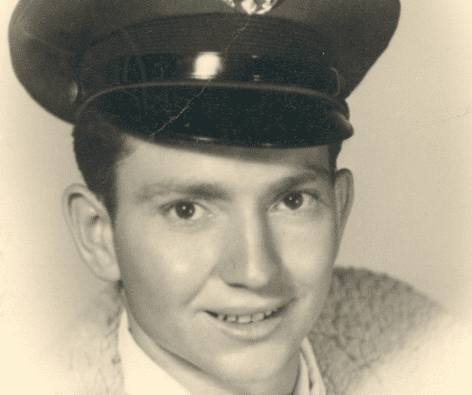
Hugh Hefner
Playboy magnate Hugh Hefner started with humble journalism beginnings. He started his high school newspaper and eventually became a writer for a military newspaper in the US Army. Hefner served from 1944 to 1946 at Camp Adair and Camp Pickett. Hef did not only contribute with desk work: he began as an infantry clerk and received a sharpshooter badge during basic training. Hefner would make his way into publishing post-army and university with Esquire. He famously left to start his own publication over a $5 raise.
Mel Brooks
Funnyman Mel Brooks’s Army job was no laughing matter. Brooks was drafted into the Army during World War II and served as a corporal in the 1104 Engineer Combat Battalion, 78th Infantry Division. As a combat engineer, he diffused land mines across Europe. During the famed Battle of the Bulge, Brooks put his sense of humor to work. While the Nazis blasted propaganda recordings, Brooks set up his own loudspeakers and played the music of Jewish musician Al Jolson.
Mr. T
Lawrence Tureaud joined the US Army in the 1970s and served in the Military Police Corp. Without Vietnam in the rearview, he was not deployed for active duty but became a Squad Leader thanks to his hard work. He once chopped down 70 trees in three and a half hours as a punishment because his platoon sergeant failed to tell him exactly how many to chop. After the Army, Tureaud became a celebrity bodyguard, picking up his nickname along the way.